skip to main content
Blog

Facilities Upgrade Series Part Two: Fabrication and Welding Optimization

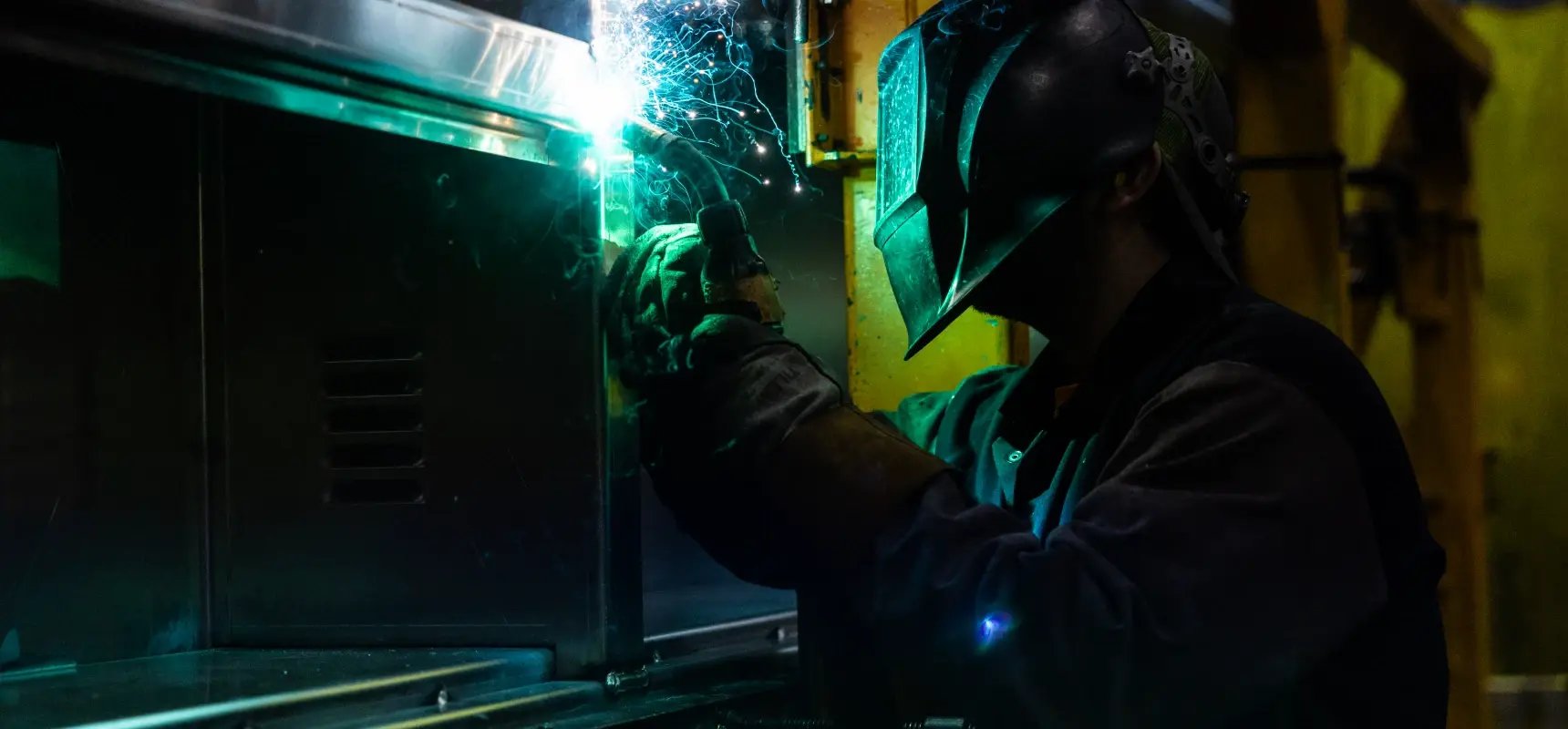
A welder at Pierce Manufacturing works on metal fabrication, generating bright sparks.At Pierce® Manufacturing, each fire truck starts as raw steel and aluminum. Flat sheets and structural components undergo hundreds of cuts, bends and welds to become the chassis, body and aerial assemblies our customers depend on.

Our Facilities Upgrade Series offers a behind-the-scenes look at the advanced technologies and strategic investments enhancing Pierce's manufacturing processes. In Part One, we explored how we are raising the bar for fire apparatus finishes. Next, we are diving into the welding and fabrication operations where each Pierce fire truck takes shape.

As you read, you’ll learn how welding and fabrication upgrades expand capacity, enhance consistency and create a safe, ergonomic environment for our skilled team members.

The New Standard: Inside Pierce’s Welding and Fabrication Upgrades
Welding and fabrication form the structural backbone of each Pierce fire apparatus. From chassis rails and body panels to cab components and aerial sub-assemblies, the machined and fabricated parts are produced in-house, giving Pierce direct control over quality and consistency at every step.

Introducing production advancements and new technologies across welding and fabrication is helping Pierce enhance operator safety and grow capacity, all while focusing on safety and efficiency.

Here's a closer look at the upgrades.

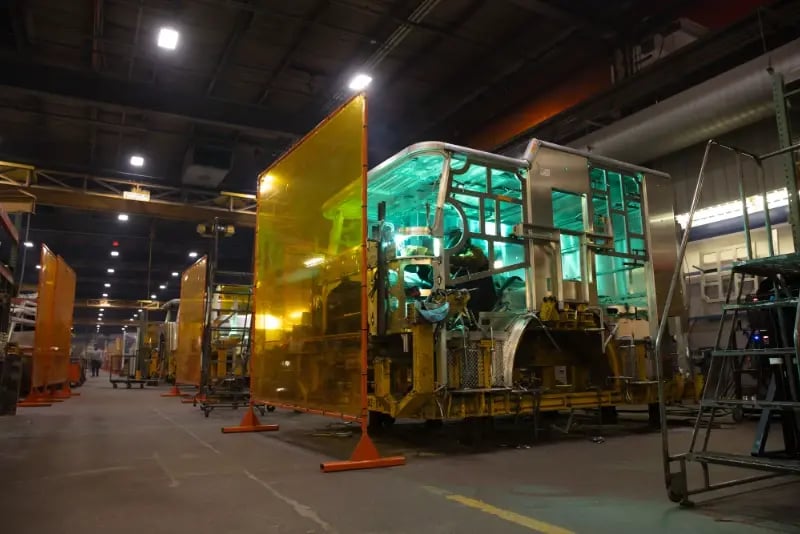
A technician welds a fire apparatus cab behind protective screens at a Pierce Manufacturing facility.

Welding Upgrades

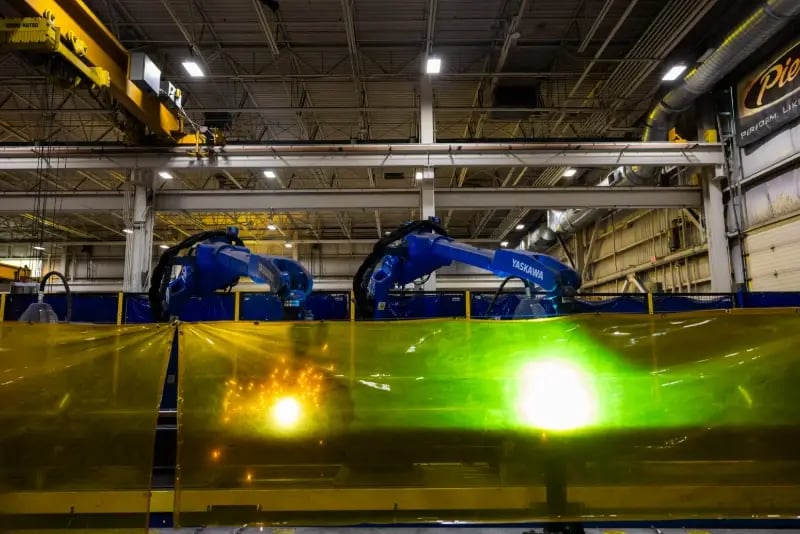
Two automated robotic welding arms in operation behind a protective screen at a Pierce Manufacturing facility.

Automated Base-Rail Welding: A new automated welding cell manages welding operations for the base rails of aerial device frames. By automating this foundational step, Pierce can deliver:

  • Consistent, high-quality welds.
  • Increased manufacturing capacity to meet rising demand for aerials.
  • The flexibility to reallocate skilled welders to other areas of the operation, supporting capacity growth across facilities.

For customers, automated welding means increased aerial capacity with a focus on consistency.

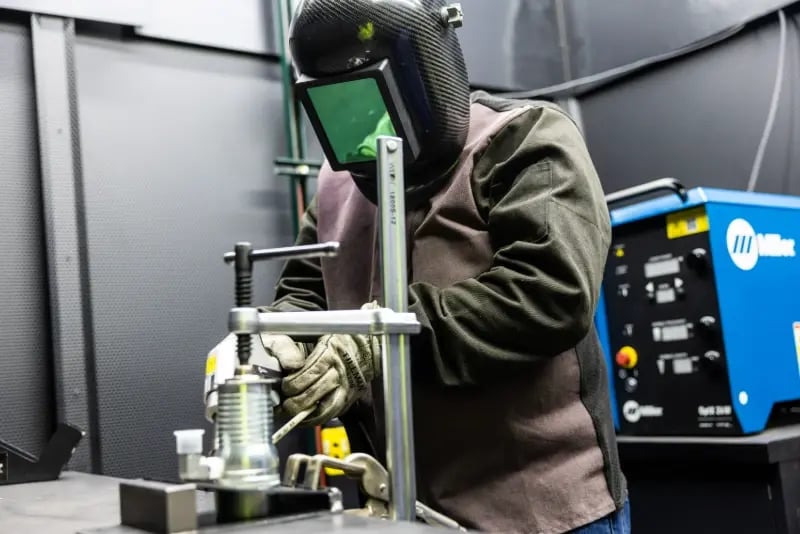
Handheld Laser Welding: Pierce has introduced handheld laser welding as part of its ongoing investment in new technology. Handheld laser welding is a complement to traditional welding. It is used in specific use cases, such as stainless-steel fluid-fill spouts. Handheld laser welding offers:

  • Clean, seamless welds on thin materials.
  • Reduced heat distortion and enhanced fit on mating components.
  • The ability to train entry-level team members to produce welds, which previously required specialized expertise.
A technician uses a handheld laser welding tool at a Pierce Manufacturing fabrication facility.

“Our investment in new welding technology is about delivering consistent quality at scale while creating room for our team members to grow.” — Vijay Kittuswamy, Senior Director - Operations Engineering

Fabrication Upgrades

Pierce specializes in fabricating high-quality custom apparatus parts in-house. 
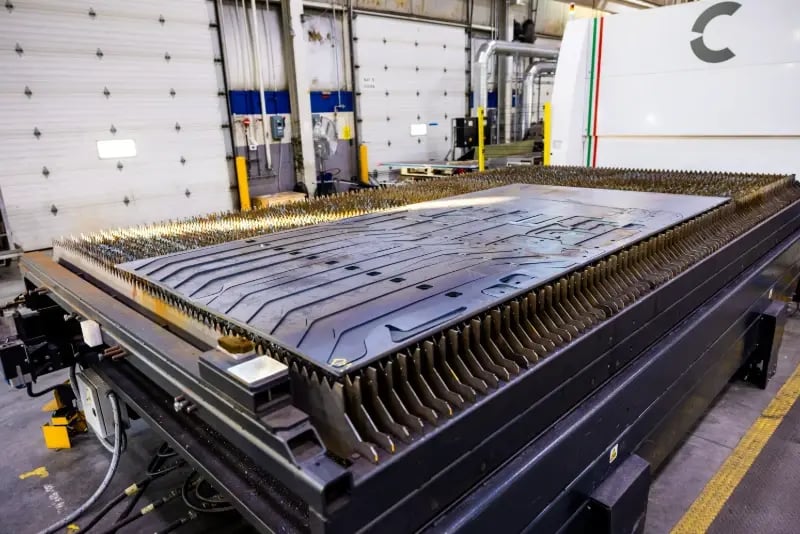
A 30 kW fiber laser cutting sheet metal at a Pierce Manufacturing fabrication facility.

Cutlite Penta Fiber Plus Bevel 30 kW Laser: Pierce has added a Cutlite Penta Fiber Plus Bevel 30 kW Laser with integrated bevel-cutting capability. The new laser cuts thin to thick steel at high speed and adds bevels in the same pass, providing:

  • High-speed cutting across a wide range of material thicknesses.
  • Integrated bevel cuts, which helps reduce downstream work.
  • Bevels on demand for welding or clearance, applied exactly where they're needed.

For customers, this means Pierce is committed to increasing capacity for structural components required for apparatus manufacturing to deliver fire trucks to firehouses faster.

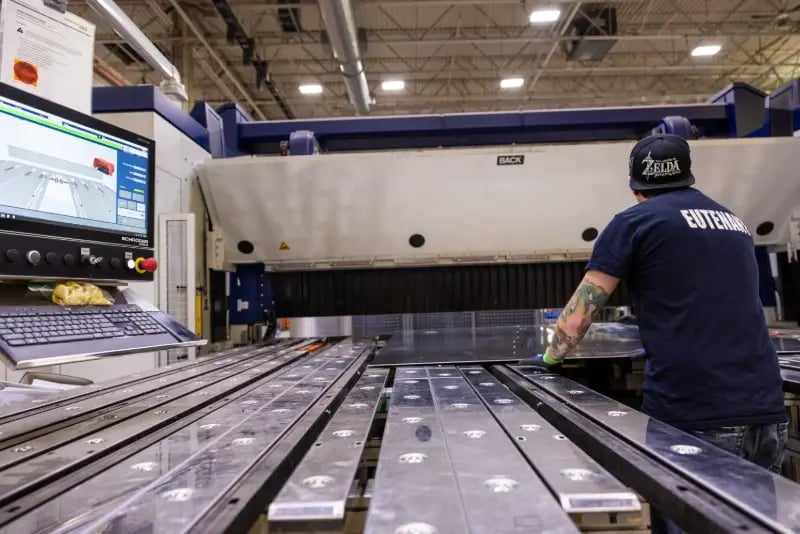
Schroeder Folding Machine: A new Schroeder Folding Machine forms large steel and aluminum components — including the 8' flat sheets which become rear body panels. Rather than asking team members to flip and lever heavy material, the machine keeps the sheet flat while automatic tool changes, a folding beam and grippers do the work, delivering:

  • Increased cycle times and reduced setup with automatic tool changes.
  • Enhanced ergonomics to help reduce shoulder, elbow and wrist strains which can be common in fabrication.
  • The ability for one team member to complete work efficiently and safely.

For customers, this means precisely formed components moving through fabrication faster.

A Pierce Manufacturing operator uses a Schroeder folding machine to fabricate metal sheets.
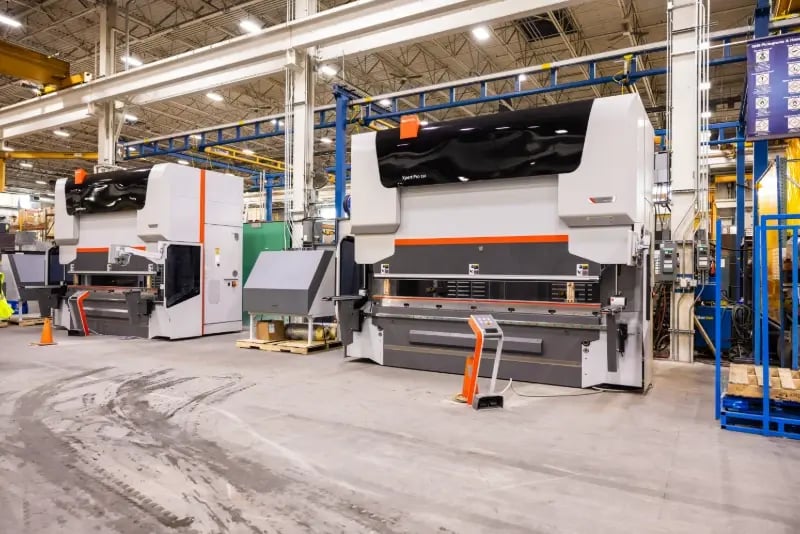
Two new Bystronic Xpert Pro press brakes installed on the Pierce Manufacturing fabrication floor.


New Bystronic Press Brakes:
Pierce has installed new Bystronic Press Brakes ranging from 150 to 250 tons, equipped with 6-axis back gauges, offline programming and 3D digital displays. Compared to legacy press brakes, these machines deliver:

  • Offline programs which allow operators to simply select a file rather than programming manually.
  • Increased operator safety.
  • Increased changeover speed between parts.
  • A reduced learning curve for new team members forming cab components and other parts.
  • Increased material bending freedom with zero machine contours and expansive workspace.
  • Flexible, scalable and future-ready capabilities.

For customers, this means cab components and other formed parts arrive at assembly with the precision Pierce apparatus are known for.

“Automated fabrication machines help us improve efficiency and shorten the learning curve for new team members. This translates into improved production, operator safety and throughput.” — Vijay Kittuswamy, Senior Director - Operations Engineering

Read more about our expansion and investments to support capacity expansion.

Aerial Assembly: Ergonomic Turntable Positioner
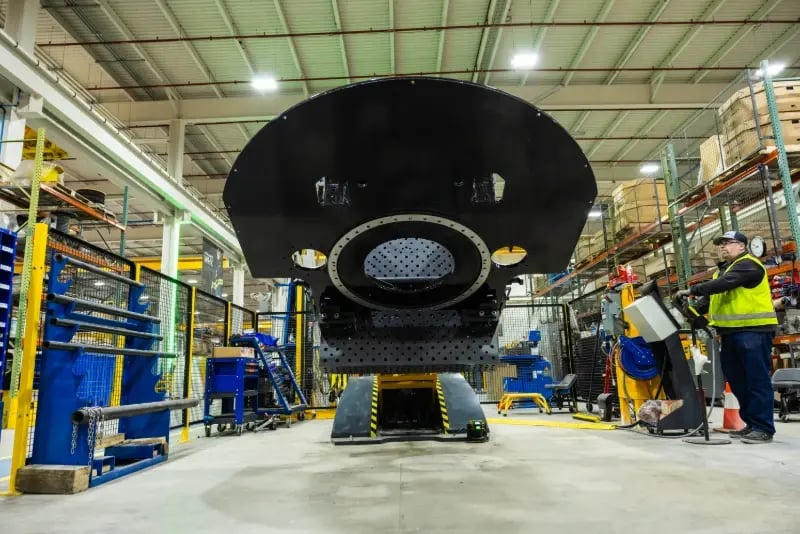
Pierce has also introduced a new Ergonomic Turntable Positioner in aerial assembly. This is Pierce's first modular fixturing and a glimpse of how upstream improvements result in strengthened downstream operations.

The turntable positioner allows team members to load an aerial sub-assembly and maneuver it into various positions required for each task. Rather than working around fixed build stands or relying on cranes to reposition heavy components, operators can rotate the turntable to the optimal working height and angle. This provides:

  • Improved ergonomics, eliminating the need to crawl in, around or through components.
  • Reduced fatigue and reliance on overhead cranes or build stands.
  • Increased assembly efficiency with each task due to positioning abilities.
A worker operates a large weld positioner holding a heavy metal component inside a Pierce Manufacturing facility.

“For Pierce, ergonomics and efficiency are two sides of the same coin — when team members are positioned to work safely and comfortably, enhanced quality and capacity follow.” — Vijay Kittuswamy, Senior Director - Operations Engineering

Enhancing Quality Control and Workflow

Beyond equipment investments, Pierce is optimizing how its weld and fabrication operations flow together. Plant optimization and additional layout work are already underway, with the goal of creating more intuitive handoffs between fabrication, welding and downstream assembly.

Production reconfiguration reflects our commitment to lean manufacturing, recognizing smarter flow between stations is as critical as the machinery within them.

With new welding cells, advanced laser cutting, precision forming and modular fixturing, Pierce is raising the bar in welding and fabrication operations.

Our upgrades streamline production while supporting the skilled team members who deliver the durability and craftsmanship Pierce customers have come to appreciate.

At its core, our welding and fabrication investments are about three things: capacity, quality and the people behind the scenes. And these facility upgrades are just the beginning.

Stay tuned for the next installment in our Facilities Upgrade Series!

In the meantime, review our recent manufacturing innovations or reach out to your local dealer with questions. If you missed it, catch up on Part One: Painting the Future of Fire Apparatus.

View All Blog Posts

Subscribe & Keep Up To Date

Yes, I want to become a Pierce guru!


About Pierce Manufacturing
Pierce Manufacturing Inc., an Oshkosh Corporation [NYSE: OSK] business, is the leading North American manufacturer of custom fire apparatus. Products include custom and commercial pumpers, aerials, rescue trucks, wildland trucks, mini pumpers, and homeland security apparatus. In addition, Pierce designs its own foam systems and was the first company to introduce frontal airbags and the Side Roll Protection system to fire apparatus. To learn more about Pierce, visit www.piercemfg.com.

About Oshkosh Corporation

At Oshkosh (NYSE: OSK), we make innovative, purpose-built vehicles and equipment to help everyday heroes advance communities around the world. Headquartered in Wisconsin, Oshkosh Corporation employs over 18,000 team members worldwide, all united behind a common purpose: to make a difference in people’s lives. Oshkosh products can be found in more than 150 countries under the brands of JLG®, Pierce®, MAXIMETAL, Oshkosh® S-Series™, McNeilus®, IMT®, Jerr-Dan®, Frontline™ Communications, Oshkosh® Airport Products, Oshkosh AeroTech™, Oshkosh® Defense and Pratt Miller. For more information, visit oshkoshcorp.com.

®, ™ All brand names referred to in this news release are trademarks of Oshkosh Corporation or its subsidiary companies.

Forward Looking Statements

This news release contains statements that the Company believes to be “forward-looking statements” within the meaning of the Private Securities Litigation Reform Act of 1995. All statements other than statements of historical fact, including, without limitation, statements regarding the Company’s future financial position, business strategy, targets, projected sales, costs, earnings, capital expenditures, debt levels and cash flows, and plans and objectives of management for future operations, are forward-looking statements. When used in this news release, words such as “may,” “will,” “expect,” “intend,” “estimate,” “anticipate,” “believe,” “should,” “project” or “plan” or the negative thereof or variations thereon or similar terminology are generally intended to identify forward-looking statements. These forward-looking statements are not guarantees of future performance and are subject to risks, uncertainties, assumptions and other factors, some of which are beyond the Company’s control, which could cause actual results to differ materially from those expressed or implied by such forward-looking statements. These factors include the Company's ability to successfully integrate the AeroTech acquisition and to realize the anticipated benefits associated with the same; the risks associated with international operations and sales, including compliance with the Foreign Corrupt Practices Act;  the Company’s ability to comply with complex laws and regulations applicable to U.S. government contractors; cybersecurity risks and costs of defending against, mitigating and responding to data security threats and breaches impacting the Company; the Company’s ability to successfully identify, complete and integrate other acquisitions and to realize the anticipated benefits associated with the same; and risks related to the Company’s ability to successfully execute on its strategic road map and meet its long-term financial goals. Additional information concerning these and other factors is contained in the Company’s filings with the Securities and Exchange Commission. All forward-looking statements speak only as of the date of this news release. The Company assumes no obligation, and disclaims any obligation, to update information contained in this news release. Investors should be aware that the Company may not update such information until the Company’s next quarterly earnings conference call, if at all.

# # #